Can Supplements Help Weight Loss? What the 5-HTP Satiety Trials Actually Measured
Quick Answer: Can Supplements Help Weight Loss Through Appetite?
A supplement can nudge appetite, but it cannot decide the outcome. The 5-HTP satiety studies are small, short and mostly measured food intake and self-rated fullness rather than long-term body weight, and the amounts used were far larger than what most appetite products contain. The honest summary is that the direction of the findings is interesting and the strength of the evidence is weak.
- What was measured: calories eaten at a test meal and hunger ratings, over weeks rather than months.
- What was not settled: whether any of it holds up for a year, in ordinary life, at ordinary doses.
- What still decides the result: the size of your meals, your protein and fibre intake, how much you move and how you sleep.

What 5-HTP is, and why appetite researchers went looking
5-hydroxytryptophan, usually written 5-HTP, is a molecule your body makes from the amino acid tryptophan on the way to producing serotonin. As a supplement it is normally extracted from the seeds of the West African plant Griffonia simplicifolia. It is one step closer to serotonin than tryptophan is, and unlike serotonin itself it crosses into the brain.
The reason appetite scientists became interested is straightforward. Serotonin signalling in the hypothalamus is part of how the brain registers that a meal is enough. Drugs that increased serotonin activity reduced food intake, which is why several appetite-suppressing medicines of the 1980s and 1990s worked through serotonin pathways. Most of those drugs were later withdrawn for safety reasons that had nothing to do with appetite and everything to do with heart valves and blood pressure. The mechanism, though, remained plausible, and a precursor that is sold as a supplement rather than a drug is an obvious thing to test.
That is the setup. It is a reasonable hypothesis, not a proven claim, and the distance between those two things is the whole subject of this article. People who search “can supplements help weight loss” are usually asking about exactly this kind of ingredient: something with a textbook mechanism behind it, sold on the strength of that mechanism rather than on the strength of the outcome data.
What the small trials actually measured
Read the 5-HTP appetite literature and a pattern emerges quickly. The studies are small, often two or three dozen participants. They run for weeks, not months. They are frequently crossover designs, where the same people take 5-HTP and a placebo in turn. And the primary outcome is usually one of two things: how much food a person eats at a supervised test meal, or how hungry they say they feel on a visual analogue scale, which is a line on a page from "not hungry at all" to "as hungry as I have ever been".
Those are legitimate measurements. They are also proxies. Eating less at one lab lunch does not automatically mean eating less across a week, because appetite compensates. People who eat lightly at noon frequently eat more at eight in the evening, and a short study will not catch that. Self-rated fullness has the same problem in reverse: it is genuinely what the person experienced, and it is also strongly influenced by expectation. When someone knows they are in a study about appetite, the ratings drift.
Body weight, where it appears at all in this literature, is usually a secondary outcome measured over a handful of weeks. A few weeks is not long enough for a weight change to separate cleanly from normal fluctuation in water, glycogen and gut contents. When you see a striking headline number attached to a short study, that is usually what you are looking at.
The useful question is never "did this supplement do something?" It is "did it do something larger than the noise, for longer than a month, at a dose a real person would take?" For 5-HTP and appetite, the first answer is probably yes, the second is unknown, and the third is usually no.
The doses used, and how they compare to what you can buy
This is where most of the gap between the research and the shelf sits. The appetite work on 5-HTP generally used amounts in the hundreds of milligrams per day, split across doses and taken before meals. Consumer capsules are commonly sold at a fraction of that, and blended appetite products that list 5-HTP inside a proprietary blend may carry a token amount that is impossible to verify from the label, because a blend discloses only its total.
The table below sets out the shape of the evidence rather than promising a result. Treat the ranges as approximate, because study protocols differ and dosing was often expressed per kilogram of body weight.
| Ingredient | Typical amount in published human studies | What was measured | Strength of evidence |
|---|---|---|---|
| 5-HTP | Hundreds of mg per day, split before meals | Test-meal intake, hunger ratings | Weak. Small samples, short duration |
| Protein at meals | Grams, as ordinary food | Later intake, fullness, body composition | Strong and consistent |
| Viscous fibre | Grams per meal | Gastric emptying, fullness, intake | Moderate to strong |
| Vinegar with a carbohydrate meal | 15 to 30 ml of vinegar | Glucose and insulin response | Modest, small trials |
| Caffeine | Tens to low hundreds of mg | Energy expenditure, appetite | Real but small and tolerance-limited |
Notice what the top of the evidence column looks like. The ingredients with the strongest support are the ones that are not really supplements at all. That is not a rhetorical trick, it is what the literature says, and any page that tells you otherwise is selling harder than the data allows.
Looking at the label rather than the claim
If you are comparing appetite products, the first thing worth doing is reading the Supplement Facts panel and checking whether the amount of the active ingredient is disclosed at all. People searching for where to buy apple cider vinegar gummies usually find a dozen near-identical labels; the disclosed milligrams are what separate them.
See the current JellyTide offerWhy the serotonin story is more complicated than it sounds
The mechanistic argument runs: more 5-HTP means more serotonin, more serotonin means more satiety signalling, therefore less eating. Every arrow in that chain is doing more work than it looks.
The first arrow is the most solid. Taking 5-HTP does raise serotonin production, which is precisely why it interacts with serotonergic medicines and why that interaction is taken seriously. The second arrow is where things get murky. Serotonin is not one signal. It acts on more than a dozen receptor subtypes distributed across the brain and the gut, and the appetite effect that drug developers chased was tied to specific receptors, not to a general rise in serotonin. Flooding the system with precursor is a blunt instrument compared with a drug designed for one receptor.
The third arrow, from satiety signalling to actual eating behaviour, is the weakest of all, because human eating is not governed by satiety signalling alone. It is governed by portion size, by what is in the fridge, by the clock, by whether you are bored, by whether anyone else is eating, and by how much you slept. A modest push on one hormonal input has to compete with all of that.
There is also a well-known tolerability issue. Nausea is the most commonly reported side effect of 5-HTP, and it is dose-related. It is worth being alert to the possibility that some of the reduced intake recorded in short studies reflects mild queasiness rather than contented fullness. Those are not the same experience, and only one of them is something you would want to keep up.
What 5-HTP cannot do, stated plainly
It cannot treat, cure or prevent any disease, and nothing on this page should be read as suggesting otherwise. It is a dietary supplement.
Beyond that legal boundary there are practical limits worth naming:
- It cannot create a calorie deficit by itself. Every trial that reported a weight outcome ran alongside dietary instruction. The supplement was never the intervention on its own.
- It cannot be assumed safe alongside psychiatric medication. This is the single most important caution. Combining serotonin precursors with antidepressants, triptans, tramadol or similar drugs risks excess serotonin activity, which can be serious. Ask a clinician; do not experiment.
- It cannot substitute for sleep. Short sleep raises hunger and shifts food preference toward energy-dense choices with a reliability that no appetite supplement has come close to matching.
- It cannot be verified from a proprietary blend. If the panel gives one total for six ingredients, the amount of any single one is unknowable from the outside.
If you have read our piece on the 3pm slump and what blood sugar has to do with snacking, this will sound familiar: the interventions with the best evidence are the least exciting ones, and the ones marketed hardest are usually at the thin end of the literature.
How this compares with what an apple cider vinegar gummy contains
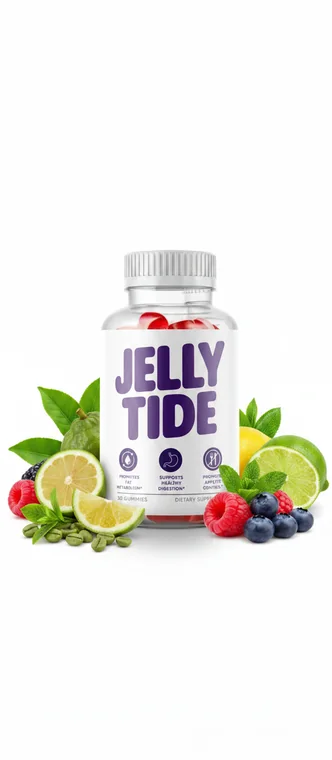
To be clear about our own subject: JellyTide is not a 5-HTP product. It is an apple cider vinegar and BHB gummy, and its 525 mg blend carries apple cider vinegar together with beta-hydroxybutyrate calcium, magnesium and sodium. If you specifically want a serotonin precursor, this is not the label that provides one, and we would rather say so than blur the point.
What the vinegar side of that panel has going for it is a different and slightly better-supported mechanism: small human trials suggest that acetic acid taken with a carbohydrate meal lowers the glucose and insulin response, most likely by slowing gastric emptying. That is a modest effect from small studies, and the doses used in those studies were 15 to 30 millilitres of liquid vinegar, which is more acetic acid than a gummy delivers. Modest and honestly described still beats dramatic and unsupported.
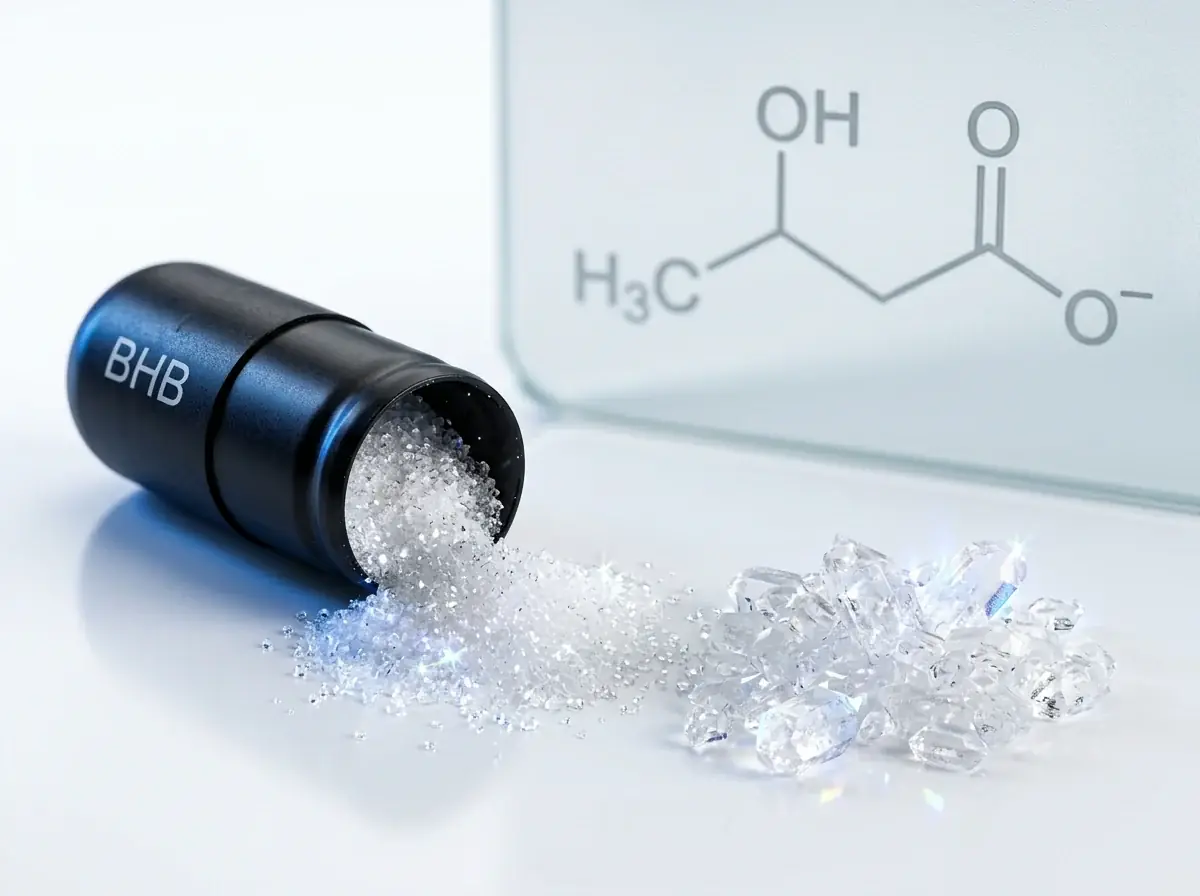
The BHB salts are a third thing again. They raise circulating ketones briefly. In the milligram amounts a gummy can carry, they do not put anyone into nutritional ketosis, and any page suggesting they do is not reading its own label.
A sensible way to read any appetite supplement claim
Four questions will get you most of the way through the marketing on any product in this category, whether you are weighing up the best weight loss supplement for women over 40 or simply comparing two gummies on a shelf.
One: is the amount disclosed? A named ingredient inside an undisclosed blend tells you nothing about dose. Panels that break out milligrams per ingredient are being more useful to you than panels that do not.
Two: does the amount match the research? This is where most appetite products quietly fail. An ingredient studied at several hundred milligrams and included at ten is decoration.
Three: what was the outcome in the study? "Supports satiety" can rest on a hunger rating in twenty people over two weeks. That is a real measurement and a small one. Ask what was counted.
Four: what is the honest ceiling? If a product's own best-case evidence is a small effect on appetite, then the product's honest promise is a small effect on appetite. Anything more is invention.
Run those four questions and the question of whether a given supplement can help weight loss stops being philosophical. Answer them and the apple cider vinegar gummies price you are comparing starts to look like a decision about disclosed milligrams rather than a leap of faith. That is the level at which supplements are worth buying: as a small, cheap, easy addition to the things that actually move the number, not as a replacement for them.
Where this leaves the original question
Can supplements help weight loss? At the edges, sometimes, by a small amount, in people who are already doing the harder things. The 5-HTP satiety trials are a good case study in why that hedged answer is the correct one: a plausible mechanism, a handful of small short studies pointing in a consistent direction, doses that outrun what is usually sold, and no long-term outcome data to speak of. That is not nothing. It is also not a shortcut, and a product that promises you one is not describing the research it cites.
Our position on this site has not changed. Fix the meal first. Add protein and fibre. Walk after eating. Sleep properly. Then, if a supplement is easy to keep up and you are clear-eyed about the size of the effect, take it as the last item on the list rather than the first.
Medical note: this article is general wellness information, not medical advice, and it summarises published evidence rather than making a product claim. JellyTide is a dietary supplement, not a drug, and is not intended to diagnose, treat, cure or prevent any disease. Speak to a healthcare professional before starting any supplement, especially if you are pregnant, nursing or taking medication.
Frequently asked questions
Can supplements help weight loss on their own?
No single supplement drives weight change on its own. The published effects for appetite-related ingredients are small, and they were measured in people who were also following a calorie-controlled diet in the trial. Supplements sit at the edges of a result that diet, activity and sleep decide.
What did the 5-HTP satiety trials actually measure?
Mostly short-term intake and self-reported fullness. Typical designs gave 5-HTP for a few weeks, then recorded food intake in a lab meal or a diary, plus hunger ratings on a visual analogue scale. Body weight was often a secondary outcome, not the main one.
Is 5-HTP an ingredient in JellyTide?
No. JellyTide is an apple cider vinegar and BHB gummy. Its 525 mg blend contains apple cider vinegar and beta-hydroxybutyrate calcium, magnesium and sodium. If you specifically want 5-HTP, this is not the product that carries it.
Who should avoid 5-HTP?
Anyone taking an antidepressant, a triptan, tramadol or another serotonergic medicine should not take 5-HTP without medical supervision, because of the risk of excess serotonin activity. Pregnancy, nursing and existing liver or kidney conditions are also reasons to ask a clinician first.
Sources
- PubMed — 5-hydroxytryptophan, satiety and food intake literature
- NIH Office of Dietary Supplements — dietary supplement fact sheets
- NIH National Center for Complementary and Integrative Health — dietary and herbal supplements
- Harvard T.H. Chan School of Public Health — Healthy Weight
- Mayo Clinic — weight loss basics and expectations
Read the panel before you decide
The complete JellyTide Supplement Facts panel is transcribed and photographed on the home page, including the arithmetic on how much of the 525 mg blend can be ketone salt. If the label answers your questions, the current offer is one click away.
Check availability and the current offer