Meal Replacement Shake vs Fiber Jelly
Quick Answer: Meal Replacement Shake or Fiber Jelly?
A meal replacement shake swaps out one meal's calories in a measured, convenient package, while a low-calorie fiber jelly is taken before a meal to blunt the appetite you bring to it. They solve different problems, and many people get the most control by pairing a shake at breakfast with a fiber jelly before their largest meal.
- What a shake does: replaces a whole meal's calories with a fixed, convenient portion.
- What a fiber jelly does: adds very few calories and helps you curb the next meal.
- What decides results: total daily calories, protein, fibre and how well you keep the habit up.

The meal replacement shake is one of the most searched weight-loss tools on the internet, and for a simple reason: it turns the hardest decision of the day, what to eat, into a scoop and a shaker. But a meal replacement shake is only one kind of appetite tool, and it is not the only one worth knowing about. This guide puts the shake side by side with a very different device, a low-calorie fiber jelly you take before a meal, and shows you when to reach for each, when to combine them, and where both of them stop working. Neither is magic. Both are structure, and structure is most of what weight management actually needs.
What a meal replacement shake actually does
Strip away the branding and a meal replacement shake is a pre-portioned meal in liquid form. It fixes three things you would otherwise have to manage by hand: the calorie count, the protein amount, and the moment you stop eating. When a meal is a shake, there is no bread basket, no second helping, no "I'll just finish the pan." You made the portion decision when you scooped the powder, and the decision holds. Mayo Clinic's review of meal replacements reaches the same conclusion: the benefit is structure and portion control, not anything the powder itself does.
That is the entire mechanism, and it is genuinely useful. Most people do not overeat because they lack willpower in some abstract sense; they overeat because real meals are open-ended and hunger negotiates in the moment. A shake closes the negotiation. The better formulas also carry a serious dose of protein, which matters because protein is the most filling of the three macronutrients and it protects lean muscle while you are eating fewer calories overall. A shake with twenty-five or thirty grams of protein does more for satiety than the same calories in refined carbohydrate.
The honest limits matter too. A shake does not burn anything. It works only when it lowers your total intake for the day, and it is easy to erase that benefit by treating the shake as an addition rather than a replacement. Drink a shake and still eat lunch, and you have simply added calories. The powder has no opinion about the rest of your day; you have to supply the deficit.
What a low-calorie fiber jelly does differently
A fiber jelly attacks a different moment. You do not use it instead of a meal; you use it a short time before a meal you still intend to eat. Its job is to take the sharp edge off the hunger you arrive with, so that you serve a smaller portion, eat a little more slowly, and register fullness before you have cleared a plate you did not need. Because it is very low in calories, it can do that without meaningfully adding to your daily total.
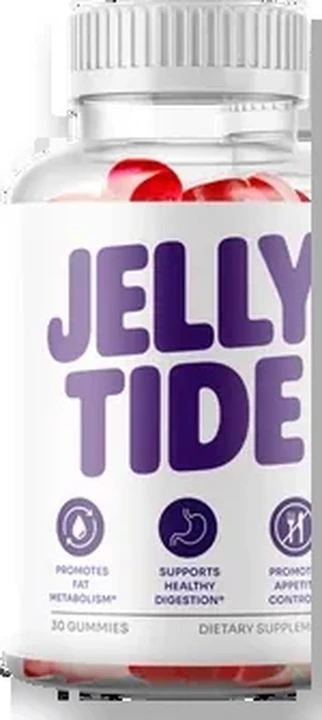
The category this belongs to is pre-meal appetite tools, and the general idea has a plausible basis: something with volume and a bit of viscosity in the stomach ahead of a meal can slow how quickly that meal empties and give the "I've had enough" signalling a head start. JellyTide sits in this pre-meal-jelly category. It is a low-calorie jelly you take before eating rather than a powder you drink in place of eating, and the exact amounts of what is inside are printed on its Supplement Facts panel, which is the number that actually separates one product from another. Read the panel before you read the marketing. Harvard's fibre overview explains why viscosity and water are doing the work in that mechanism.
The limit here is the mirror image of the shake's. A fiber jelly does not remove a meal, so it cannot help you if the meal it precedes is enormous and you eat all of it anyway. It nudges; it does not decide. Used before a sensible plate, that nudge is worth having. Used as permission to keep the plate huge, it does nothing.

See what is actually in the jelly
If you are weighing a shake against a pre-meal jelly, the decisive detail is what the jelly discloses on its label. The current JellyTide offer and its full panel are one click away, so you can compare disclosed amounts instead of promises.
See the current JellyTide offerMeal replacement shake vs fiber jelly, head to head
The two tools are not competitors so much as specialists. The table lays out where each one earns its place, so you can match the tool to the problem you actually have rather than to the louder advertisement.
| Feature | Meal replacement shake | Low-calorie fiber jelly |
|---|---|---|
| When you take it | Instead of a meal | Shortly before a meal |
| Calories | Replaces a meal's worth (a few hundred) | Very low; an add-on, not a meal |
| Main job | Fix portion and protein for that meal | Curb the appetite you bring to the next meal |
| Best for | Rushed mornings, structured deficits | Big evening meals, buffet or restaurant situations |
| Biggest failure mode | Adding it on top of meals, not swapping | Expecting it to shrink a meal you refuse to shrink |
| What still decides results | Total daily calories | Total daily calories |
Notice the last row is identical. Whatever tool you pick, the number that moves the scale is total intake over time. Both a shake and a jelly are ways of making that number easier to hit; neither is a way of ignoring it. Harvard's healthy weight guidance says the same thing without selling you anything.
Objection one: "won't I regain the weight when I stop the shakes?"
This is the most common and the most fair objection to meal replacement shakes, and the honest answer is: yes, if the shake was the only thing that changed. A shake that quietly teaches you what a correct portion feels like, and gets you used to a real protein target, leaves you with skills you keep. A shake that you lean on twice a day while learning nothing about food leaves you with a tub-shaped dependency, and when the tub is empty the old portions come back.
The fix is to treat the shake as a teacher, not a life sentence. Use it during the stretch when you most need structure, pay attention to how much smaller a satisfying portion actually is, and gradually rebuild real meals at that new size. This is exactly why pairing a shake with a pre-meal habit like a fiber jelly can help the transition: the jelly is something you can carry into ordinary restaurant and home meals long after you have retired the shaker.
Objection two: "isn't a fiber jelly just expensive water?"
It is a reasonable suspicion, because plenty of appetite products are exactly that. The test is the label. A pre-meal jelly is worth something only to the extent its Supplement Facts panel discloses meaningful amounts of whatever it claims to work through, and worth nothing if the panel hides everything inside a proprietary blend that lists one total for six ingredients. That is not a JellyTide-specific point; it is how you should judge every product in this aisle. We wrote a whole framework for this in our weight loss supplement buyer's guide, and the first rule is always: is the amount disclosed?
The other half of the answer is expectation-setting. Even a well-dosed pre-meal jelly produces a small effect on a single meal. Small effects, repeated before your biggest meal every day, add up over months. But if you are expecting a jelly to override a genuinely large appetite by itself, no product in this category can honestly promise that, and the ones that do are the ones to walk away from.
Objection three: "I don't want to skip real meals"
Then do not, and this is precisely where the fiber jelly is the better fit for you. Meal replacement shakes ask you to give up a meal in exchange for control; some people find that trade easy, others hate it. A pre-meal jelly asks for no such trade. You keep every meal, you keep cooking and sitting down to eat, and the only change is that you arrive at the table a notch less ravenous. For people whose eating is social, cultural or simply enjoyable, that is a far more sustainable lever than swapping dinner for powder.
Can I use both a meal replacement shake and a fiber jelly?
Yes, and the combination is often stronger than either alone because they cover different parts of the day. A very common pattern looks like this: a protein-forward meal replacement shake handles the breakfast or lunch you never have time to make properly, which removes an entire meal's worth of impulsive decisions. Then, in the evening, a low-calorie fiber jelly goes to work before the one real, sit-down meal you actually want to enjoy, taking the edge off so you serve a reasonable plate rather than an emotional one.
Two rules keep the combination honest. First, count the shake's calories toward your daily total; it is a meal, not a freebie. Second, drink real water with the jelly, because the pre-meal effect leans on volume and hydration, and a jelly taken with a dry mouth does less than a jelly taken with a full glass of water. If you want the deeper comparison on filling ingredients, our piece on protein powder versus fiber jelly for fullness breaks down which lever suits which meal.
Hydration is not the footnote, it is part of the tool
Both tools quietly depend on water. A meal replacement shake is mixed with liquid, and the volume of that liquid is part of why it fills you. A fiber jelly works partly by occupying space and slowing things down, and it cannot do that in a dehydrated gut. Beyond the two products, thirst is one of the most common sensations people misread as hunger, especially in the late afternoon. A large glass of water before you decide you are hungry is the cheapest appetite tool there is, and it makes everything else on this page work better.
If your day tends to fall apart at a specific time, it is worth understanding why. Our article on the 3pm slump, blood sugar and snacking covers the mid-afternoon crash that sends most people toward the vending machine, and both a shake and a pre-meal jelly can be positioned to defuse exactly that window.
Medical note: this article is general wellness information, not medical advice. JellyTide is a dietary supplement, not a drug, and is not intended to diagnose, treat, cure or prevent any disease. Meal replacement shakes are food products, not medicine. Speak to a healthcare professional before making large changes to your diet, especially if you are pregnant, nursing, managing a health condition or taking medication.
Frequently asked questions
Are meal replacement shakes good for weight loss?
They can help, mostly by making portion control easy. A meal replacement shake fixes the calories and protein of one meal so you do not have to decide or measure. That structure is what drives the result, not anything magic in the powder, and it only works while the rest of the day stays in a calorie deficit.
Shake vs fiber for appetite control?
They work at different moments. A shake replaces a meal's calories outright, so there is no appetite decision to make. A low-calorie fiber jelly is taken before a meal you still intend to eat, to take the sharp edge off hunger so you serve and finish a smaller portion. One removes the meal, the other shrinks it.
Can I use both a shake and a fiber jelly?
Yes, and many people do. A common pattern is a meal replacement shake for a rushed breakfast or lunch, plus a fiber jelly such as JellyTide before the largest sit-down meal of the day. Just count the shake's calories toward your total and drink plenty of water with the jelly.
Do meal replacement shakes work long term?
Only if the habits they teach outlast the tub. Shakes are a scaffold for portion size and protein; the people who keep the weight off tend to carry those lessons into normal meals rather than depend on powder forever. Used as a permanent crutch with no other change, results usually stall.
Sources
- NIH National Center for Complementary and Integrative Health — weight control
- NIH Office of Dietary Supplements — dietary supplement fact sheets
- Harvard T.H. Chan School of Public Health — dietary fibre
- Harvard T.H. Chan School of Public Health — Healthy Weight
- Mayo Clinic — meal replacements and weight loss
Related reading
Compare the label, then decide
A meal replacement shake and a pre-meal fiber jelly can even work together. If a low-calorie jelly you take before your biggest meal is the tool you have been missing, check the disclosed amounts and the current JellyTide offer before you buy anything.
Check availability and the current offer